
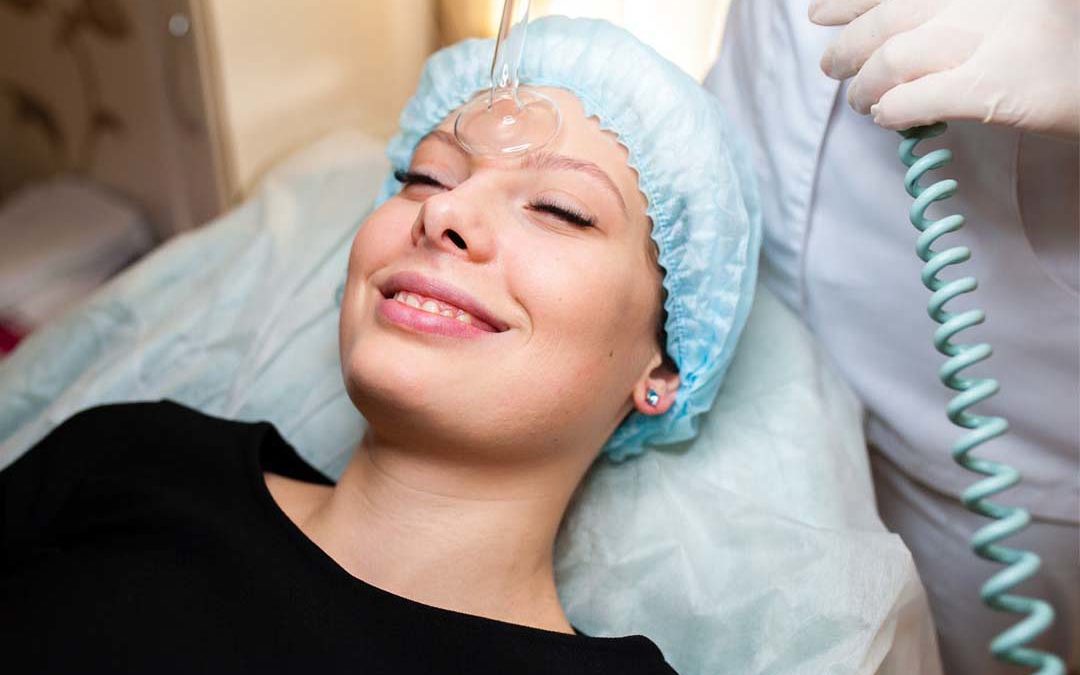
High frequency has been used in medicine since 1896. The very first use of high frequency was to treat an infectious illness, like a sore throat, before the discovery of antibiotics. Research shows that high frequency boosts the healing process of wounds by 62% and improves the look of wounds after healing by 43%. High frequency also reduces the pain of wounds by 17%.
What Is High Frequency?
High frequency uses alternating electric flow. There are two types of electricity: direct and alternating current.
Direct electricity, like in conventional batteries, has positive and negative poles from which electrons move back and forth. On the other hand, alternative electricity constantly changes the polarity of each pole from positive to negative. Changing the polarity from positive to negative and vice versa is called “frequency” and is measured by a unit called “Hertz.”
In normal electricity that we use at home, the frequency is 50Hz (Hertz); that means, in each second, 50 times each pole converts from positive to negative. The conventional high-frequency machines that are used in spas and beauty salons use 50,000 to 200,000 or even more Hertz. The voltage of the high-frequency machines is about 10 watts, making them safe to use on the human body and not life-threatening.
High-frequency machines are attached to a glass tube filled with argon or neon gas. The gas in the wand ignites and transfers the high-frequency energy to the skin and makes it able to spark.
The Effects of High Frequency on the Skin
High frequency
has three major effects on the skin: thermal (heat), stimulation, and ozone
generation.
Thermal
High frequency causes the molecules of water to vibrate, and the vibration of water molecules produces heat inside the skin. The heat of the high frequency is spread evenly in all layers of the skin (from the outside to the deeper layers). This is the main difference between the heat from high frequency and other local sources of heat, like a hot towel. When you use a hot towel, the heat concentrates mostly on the surface of the skin and is not equally distributed in all layers.
Stimulation
High frequency acts as a shock of electricity and, consequently, stimulates the skin cells. This stimulation is like a microscopic injury to the skin. The body responds to any shock and trauma by activating the skin repair system to fix any potential damages that might happen. Activating the skin repair system induces the production of collagen, elastin, and other skin components. It is the same mechanism that happens in laser rejuvenation therapy with peeling, micro-needling, and skin rejuvenating treatment, as well as through the healing process of a burn or skin cut.
Ozone Production
High frequency produces ozone on the surface of the skin. Ozone is a great antimicrobial that not only kills microbes but also destroys viruses and other microorganisms. Many estheticians use high frequency after skin treatments that traumatize the skin, like in acne extractions and hair removal, to disinfect the site of treatment.
Ozone
Activated oxygen, or ozone, is composed of three atoms of oxygen (O3), compared
to the normal molecule of oxygen that is only two atoms of oxygen (O2). The
extra atom of oxygen in O3 causes the ozone molecule to be unstable and release
the extra oxygen atoms to bind with other molecules and oxidize them. When the
extra oxygen tackles a microbe, it changes the structure of the microbe’s
molecules and thus kills it. This is exactly the same process of rusting metals
through oxygen: a rusted piece of iron is not iron anymore.
There are two main methods to make an ozone molecule:

Lightning or thunderstorms separate the bonds of O2 molecules and leave two single atoms of oxygen (O). The single atom of oxygen cannot stand by itself and thus joins to the other molecules, including another O2, and binds to them and makes a brand new molecule of ozone (O3). Ozone that is made during high frequency is made in this way. The sparks of high-frequency act like a bolt of mini lightning.
To produce ozone from high frequency, you need to have sparks, and, therefore, you need to have a space between the skin and the wand of high frequency. To get such a space, estheticians put a layer of dry gauze between the wand and the skin to make enough space to make sparks and produce ozone.
The second way of producing ozone is to use a particular range of UV light wavelengths. If you ever use a steamer that makes ozone, this is how a steamer produces ozone. The molecule of ozone is unstable and gradually loses the extra oxygen. Every 20 minutes, half of the ozone dissipates, meaning half of the ozone loses its extra oxygen atom and becomes a normal molecule of oxygen or O2.
The molecule of ozone is heavier than air and slowly moves to the lower level. If you are using high frequency to kill bacteria, you should allow the ozone to be on the site for a few minutes before moving. The point that is killing the microbes is the gas of ozone, not sparks and not the heat of high frequency. So it is important to leave the ozone on the site of treatment for a few minutes to eliminate bacteria.
To treat a localized bacterial infection, like in acne, you need to point the wand of high frequency to the acne lesion for about 20 seconds to make adequate ozone contact with the microbes and destroy the acne microbe.
How to Use High Frequency
There are two techniques to using a high frequency, direct and indirect methods:

Direct Method
In this
method, the esthetician holds the high-frequency wand and directly touches the
skin or brings it close to the skin of the client without him or her touching
the high-frequency wand during the treatment. This technique is mostly used for
ozone therapy and also in rejuvenating the skin.
Indirect Method
In this
technique—also known as Viennese Massage—the client holds the saturator
electrode (a special high-frequency wand) while the esthetician or massage
therapist massages the skin. In this technique, the flow of high frequency
moves from the client’s skin to the therapist’s skin. The esthetician touches
the body of the client while he or she holds the high-frequency wand. Both
client and therapist feel a tingling sensation at the point of contact of the
therapist’s hands to the client’s skin. Indirect high frequency is satisfying
for a deep warming sensation and excellent relaxation.
High Frequency and Skin Care Products
High
frequency is an alternating current of electricity, at 50,000 to 200,000 times
per second. At this frequency, there is no polarity to support any skincare
products in penetrating the skin. High frequency is not for product absorption in
the skin.
High Frequency and Skin Pores
High frequency is known to shrink skin pores. There is no muscle around pores that contract with high frequency, and there are no microorganisms that cause pores to be wide open. High frequency causes mild inflammation in the skin and around the pores. This inflammation causes the blood vessel walls to dilate and plasma and other blood fluids to flow to the location and make mild edema. The main reason pores look smaller following high frequency is due to the edema and mild inflammation. This effect on pores will return back to what it had been after a couple of hours.
High Frequency and Wrinkles
Fine
wrinkles fade immediately after applying high frequency. This effect of high
frequency is also due to inflammation and edema of the skin and will dwindle
after a few hours. High frequency, however, can stimulate a mild trauma to the
skin that, if repeated, can enhance the production of collagen and elastin. If
you use high frequency as a rejuvenation treatment on a treatment schedule, the
production of collagen and elastin increases, and, therefore, wrinkles will
fade, lasting more than 6 months.
High Frequency Increases Skin Nourishment
High-frequency overall boosts blood flow to the skin, and that is the main reason the skin feels fresher, healthier, and less puffy and has fewer dark circles around the eyes. High frequency also enhances blood flow to the scalp if used on the scalp. Increased blood flow, plus the stimulation of hair follicles, improves the growth and density of hairs.
Ozone and Regulation
The Occupational
Safety and Health Administration (OSHA) put a safe allowable level of 0.10-ppm
(parts per million) on ozone contact. This level of ozone is quite high, and
you can hit it if you are using your high-frequency machine 8 hours a day for 5
days a week.
High doses of high frequency can cause mild to moderate headaches, sore throats, and eye and nose irritation. Breathing ozone can worsen asthma, emphysema, or bronchitis. Ozone may also induce chest pain, coughing, throat irritation, and congestion.
Contraindication
High frequency is a type of electricity treatment and, like any other
electricity modality, must not be used on people who have pacemakers, are
pregnant, or have epilepsy, and extra cautions must be taken on people who have
any metals in their bodies. Using high frequency on telangiectasia (fine vessels
visible under the skin) and inflamed skin may crack and damage red blood cells,
which is not good for the body.